



C.S. Lewis, J.R.R. Tolkien, and Their Circle of Friends
Exploring Faith, Myth, and Imagination
Few writers have had a greater impact on Christian thought and fantasy literature than C.S. Lewis and J.R.R. Tolkien. Their books continue to inspire millions of readers because they combine profound truths with compelling stories. Whether through the adventures of Narnia, the epic journey through Middle-earth, or their reflections on faith and imagination, Lewis and Tolkien invite us to see the world with renewed wonder.
This section of my website is dedicated to these remarkable figures and the friends and influences who helped shape their ideas and writings.
Why Should We Care?
Lewis, Tolkien, and their circle remind us that stories matter. They believed that myth, imagination, and beauty could point beyond themselves to deeper truths. Their writings explore questions that are as relevant today as they were in the twentieth century:
- What is the nature of good and evil?
- Why do we long for something beyond this world?
- What role does friendship play in our lives?
- How do faith and reason work together?
- Why are stories so powerful?
Even readers who do not share their Christian faith often find themselves drawn into their worlds and challenged by their ideas.
Meet the Authors and Their Friends
C. S. Lewis

Clive Staples Lewis (1898–1963) was an Irish-born scholar, novelist, and Christian apologist. After a youthful abandonment of Christianity and a period of atheism, Lewis gradually came to embrace theism and eventually Christianity, influenced in part by conversations with friends such as J.R.R. Tolkien and Hugo Dyson. Lewis taught at both the University of Oxford and the University of Cambridge. He became one of the twentieth century’s most influential Christian writers through works such as Mere Christianity, The Screwtape Letters, and The Chronicles of Narnia. Lewis demonstrated that rigorous thought and imaginative storytelling could work together to illuminate Christian faith.
J. R. R. Tolkien
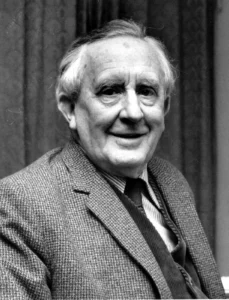
John Ronald Reuel Tolkien (1892–1973) was a philologist, professor, and one of the founders of modern fantasy literature. A devout Roman Catholic, Tolkien taught at Oxford and devoted much of his life to creating the richly detailed world of Middle-earth. His works, including The Hobbit and The Lord of the Rings, have shaped fantasy literature for generations. Tolkien believed that stories could communicate profound truths and famously argued that the Gospel itself is the “true myth” in which all human longings find fulfillment.
The Inklings
The Inklings were an informal group of writers and scholars who met regularly in Oxford during the 1930s and 1940s. Their gatherings took place in college rooms and at the The Eagle and Child pub, affectionately known as “The Bird and Baby.” Members included Lewis, Tolkien, Charles Williams, Owen Barfield, and Hugo Dyson. They read drafts of one another’s work, offered criticism, and encouraged one another’s creativity. Without the Inklings, it is difficult to imagine either The Lord of the Rings or The Chronicles of Narnia taking the forms we know today.
George MacDonald
George MacDonald (1824–1905) was a Scottish minister, novelist, and pioneer of fantasy literature. His books, including Phantastes and The Princess and the Goblin, deeply influenced both Lewis and Tolkien. Lewis once wrote that he had “never concealed the fact that I regarded him as my master.” MacDonald’s emphasis on imagination, divine love, and the spiritual significance of fairy tales can be seen throughout Lewis’s writings and, to a lesser degree, in Tolkien’s work as well.
G. K. Chesterton
Gilbert Keith Chesterton (1874–1936) was an English journalist, novelist, and Christian apologist whose wit and insight influenced generations of readers. His books, including Orthodoxy and The Everlasting Man, played a significant role in Lewis’s journey back to Christianity. Lewis later remarked that The Everlasting Man was one of the books that helped convert him. Chesterton’s love of paradox, joy, and common sense can be seen throughout Lewis’s own apologetic writings.
Featured Posts
Here are some posts from this site that explore Lewis, Tolkien, and their circle of friends:
📚 J.R.R. Tolkien: Chronological Bibliography
A guide to Tolkien’s writings, both during his lifetime and the many posthumous publications that continue to appear.
📚 The Early Years of C.S. Lewis (and How They Shaped Him)
An exploration of the experiences that formed Lewis’s character, imagination, and faith.
📚 C.S. Lewis and the Language of Apologetics
A look at Lewis’s unique approach to communicating Christian truth and why his apologetics remain influential today.
📚 C.S. Lewis, Merlin, and Messy Apologetics
Examining Lewis’s use of myth and imagination in the The Space Trilogy.
📚 The Great Divorce
A review and discussion of one of Lewis’s most imaginative and thought-provoking books.
📚 George MacDonald by C.S. Lewis
Exploring Lewis’s appreciation for the man he considered his literary master.
📚 Phantastes: A Faerie Romance for Men and Women
A review of one of George MacDonald’s most influential fantasy novels and its impact on Lewis and Tolkien.
📚 The Four Loves
A reflection on Lewis’s profound treatment of affection, friendship, eros, and charity.
📚 Why Tolkien Hated Disney
An entertaining look at Tolkien’s criticisms of Disney and his vision for fairy stories.
📚 The Problem of Susan Pevensie
A discussion of one of the most debated questions surrounding The Chronicles of Narnia.
You can find many more posts at my C.S. Lewis and Friends blog.
Begin Your Journey
Whether you are discovering Narnia for the first time, returning to Middle-earth, or exploring the rich friendships of the Inklings, I invite you to dive into these articles and join the conversation.
As Lewis himself wrote:
“Friendship is born at that moment when one person says to another, ‘What! You too? I thought I was the only one.'”
Welcome to the world of C.S. Lewis, J.R.R. Tolkien, and their friends—a world where imagination and faith meet, and where stories continue to shape our understanding of truth and beauty.
