
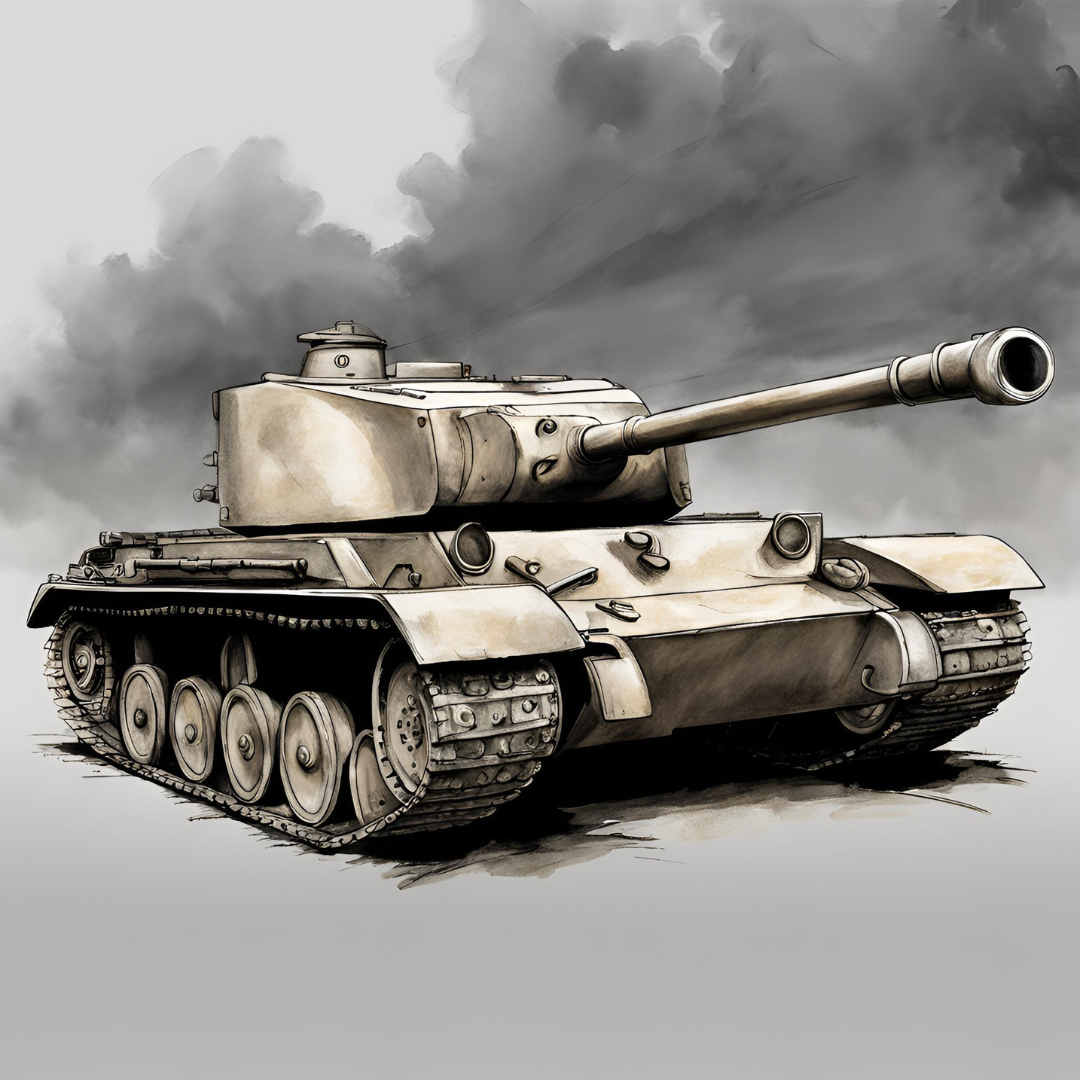
The fall of France in 1940 remains one of the most astonishing military events of the 20th century. Despite having a well-equipped and numerically strong army, France succumbed to Germany’s Blitzkrieg in just six weeks. This post explores the relative strengths of the French and German forces in terms of size, equipment, and strategy, as well as the key reasons for the swift German victory.
Comparison of Military Strengths
Infantry and Manpower
- France: At the start of the German invasion in May 1940, France had approximately 2.2 million soldiersdeployed in northeastern France and Belgium, with a total mobilization of nearly 5 million troops across the country. The French Army was supported by units from Britain and Belgium.
- Germany: The German military had about 3.3 million soldiers available for the Western Front, with 141 divisions, of which 93 were committed to the French campaign. While Germany had fewer men on the ground in the initial stages, their forces were highly concentrated in key sectors and supported by an efficient reserve system.
Tanks and Armored Vehicles
- France: The French Army had around 3,200 tanks, including the formidable Char B1 and Somua S35, both of which were superior in armor and firepower to most German tanks. However, many of these tanks were dispersed among infantry units rather than concentrated for offensive action.
- Germany: The German Wehrmacht fielded approximately 2,500 tanks, including the Panzer I, II, III, and IV.While individually weaker than many French tanks, German armor was used in concentrated Panzer divisions to maximize mobility and firepower. The Germans also employed superior tactics that emphasized speed, coordination, and combined arms operations.
Air Force (Luftwaffe vs. Armée de l’Air)
- France: The French Air Force had about 1,500 operational aircraft, but they were largely outdated, poorly coordinated, and lacked sufficient reserves of fuel and spare parts.
- Germany: The Luftwaffe deployed over 3,500 aircraft, including the advanced Messerschmitt Bf 109 fighters and Stuka dive bombers. German air superiority played a critical role in disrupting French defenses and communications.
Strategic Differences and the Fall of France
German Strategy: Blitzkrieg and the Manstein Plan
The Germans employed a bold and innovative strategy called Blitzkrieg (Lightning War), which relied on speed, surprise, and close coordination between tanks, infantry, and aircraft.
The Manstein Plan, developed by General Erich von Manstein, involved:
- A diversionary attack in Belgium, where the Allies expected the main offensive.
- A surprise thrust through the Ardennes Forest, an area the French considered impassable for tanks.
- Encirclement of Allied forces in Belgium and northern France, cutting off their supply lines and forcing surrender.
This strategy bypassed the heavily fortified Maginot Line, rendering it useless.
French Strategy: Defensive Doctrine and Poor Coordination
The French strategy was largely defensive, based on the Maginot Line, a series of fortifications along the German border. However, the Germans simply went around it.
Key weaknesses of the French approach included:
- Rigid defensive mindset: French generals, particularly Maurice Gamelin, believed in a war of attrition rather than fast-moving battles.
- Poor use of tanks: Instead of massing tanks for an offensive breakthrough, French tanks were spread thinly to support infantry.
- Slow decision-making: The French command structure was slow and lacked flexibility, making it difficult to respond to fast-moving German advances.
- Failure to anticipate the Ardennes attack: The French assumed the Ardennes was impenetrable for a mechanized army, leaving it lightly defended.
Conclusion
Despite having superior numbers and equipment in some areas, the French Army was overwhelmed by German strategy and operational effectiveness. The Blitzkrieg approach, combined with air superiority and concentrated tank formations, allowed Germany to outmaneuver and encircle the French forces. In contrast, the French reliance on static defenses, poor coordination, and outdated tactics led to their rapid defeat. The fall of France in 1940 serves as a powerful example of how strategy and operational doctrine can outweigh numerical strength in warfare.