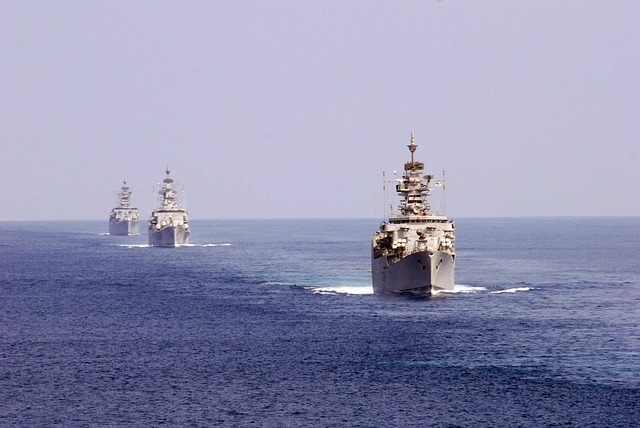
The Top Five Most Powerful Navies at the Beginning of the Second World War
At the dawn of the Second World War in 1939, naval power was a key determinant of global influence. Nations with strong navies could project power across oceans, secure supply routes, and dominate in both defensive and offensive operations. The top five navies at the start of WWII were those of the United Kingdom, United States, Japan, France, and Italy. Each had its own composition, strategic vision, and trajectory during the war. Here’s a look at what each navy looked like in 1939 and how they had changed by 1945.
1. Royal Navy (United Kingdom)
1939 Strength:
At the start of WWII, the Royal Navy was the largest in the world in terms of global presence and the number of ships.
- 15 battleships and battlecruisers
- 7 aircraft carriers
- 66 cruisers
- 184 destroyers
- 60 submarines
The Royal Navy was built around protecting the British Empire’s trade routes, with a global presence from Singapore to Gibraltar.
Ship Types & Strategy:
The Royal Navy relied on battleships for major engagements and destroyers for escort and anti-submarine warfare. Aircraft carriers were gaining importance but were still secondary to battleships in strategic thought.
1945 Status:
By war’s end, the Royal Navy had evolved dramatically:
- A shift toward aircraft carriers as the primary capital ships
- Heavy losses early in the war were replaced with new designs (e.g., King George V-class battleships, Illustrious-class carriers)
- Significant use of escort carriers and corvettes to protect convoys
- Increased focus on anti-submarine warfare after the Battle of the Atlantic
Despite its transformation, the Royal Navy emerged worn and overstretched, having sustained heavy losses and economic strain.
2. United States Navy (USN)
1939 Strength:
The US Navy was the second-largest in tonnage and technologically advanced.
- 15 battleships
- 5 aircraft carriers
- 18 heavy cruisers
- 19 light cruisers
- 100+ destroyers
- 50+ submarines
Ship Types & Strategy:
Initially still battleship-focused, though the Navy was experimenting with aircraft carriers. Submarines were intended more for reconnaissance than commerce raiding.
1945 Status:
By 1945, the U.S. Navy was the most powerful in history at that time:
- Over 100 aircraft carriers (fleet and escort)
- 23 battleships, including the massive Iowa-class
- Over 350 destroyers
- 230 submarines, which devastated Japanese shipping
- Massive amphibious capabilities and naval aviation forces
The US Navy had transitioned into a modern, carrier-centric force capable of global domination and massive offensive operations.
3. Imperial Japanese Navy (IJN)
1939 Strength:
Japan possessed the third most powerful navy, designed to challenge Western colonial powers in the Pacific.
- 10 battleships
- 6 aircraft carriers
- 36 cruisers
- 112 destroyers
- 63 submarines
Ship Types & Strategy:
Focused on quality over quantity, the IJN emphasized long-range torpedoes, fast cruisers, and powerful battleships. The Kantai Kessen doctrine anticipated one decisive battle to determine naval supremacy.
1945 Status:
After initial success (e.g., Pearl Harbor, early Pacific victories), the IJN suffered devastating losses:
- Most carriers were lost in battles such as Midway and the Philippine Sea
- Battleships like the Yamato were rendered obsolete and destroyed
- Fuel shortages and poor industrial capacity crippled the fleet
By 1945, Japan’s navy was effectively neutralized, with few operational ships and no effective naval aviation.
4. Marine Nationale (France)
1939 Strength:
The French Navy was modern and the fourth largest globally.
- 7 battleships (including modern Dunkerque-class)
- 1 aircraft carrier
- 19 cruisers
- 71 destroyers
- 80 submarines
Ship Types & Strategy:
The French fleet was designed to counter Italy in the Mediterranean and support colonial defense. It emphasized speed and modernity.
1945 Status:
Following the German invasion of France in 1940, the fleet was partially scuttled (e.g., at Toulon) or neutralized by British attacks (e.g., Mers-el-Kébir) to prevent it from falling into Axis hands.
- Some ships joined the Free French Naval Forces under Allied command
- By 1945, the French Navy was rebuilding, supported by American and British vessels, but remained a shadow of its former strength
5. Regia Marina (Italy)
1939 Strength:
Italy’s navy was impressive in size, though technologically uneven.
- 6 battleships (including new Littorio-class)
- 7 heavy cruisers, 12 light cruisers
- 60+ destroyers
- 100+ submarines
Ship Types & Strategy:
Focused on Mediterranean dominance, the Regia Marina emphasized surface action. Submarines were numerous but had limited effectiveness. Aircraft carrier capability was notably lacking.
1945 Status:
- Lost control of the Mediterranean early due to poor coordination, lack of radar, and no aircraft carriers
- After Italy’s 1943 armistice with the Allies, parts of the navy joined the Allies, while others were scuttled or seized by Germany
- By 1945, Italy’s navy was no longer a major player, though some units remained operational under Allied command
Final Thoughts
By the end of WWII, the world had witnessed the demise of the battleship era and the ascendancy of aircraft carriers and submarines. The war accelerated technological innovation and revealed the importance of industrial capacity, radar, logistics, and air power in naval warfare.
- The U.S. Navy emerged dominant, unmatched in size and capability.
- The Royal Navy remained formidable but was financially strained.
- The Japanese Navy was shattered.
- The French and Italian navies had been significantly diminished.
WWII marked a transformative period in naval history, with lessons that shaped the Cold War and modern maritime strategy.