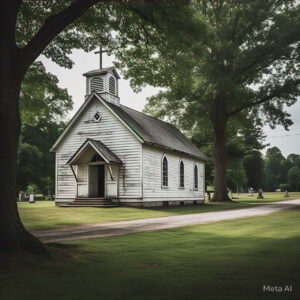


Confession as Prayer
1 John 1:5-10
Introduction
Have you ever been in the position where you had to admit that you were wrong. Not wrong factually, like getting the wrong response on a trivia show. But rather wrong in your behaviour. Have you ever had to confess that you did something bad? How did that feel? Was it easy? Did you struggle with it? How did the other person respond?
I will admit to you that I did something bad, although the pain is not very fresh, since it happened about forty-five years ago. I was in elementary school and one of the guys in our class brought to school some Exlax chocolates. These were chocolates that are used as a laxative. The person suggested that it would be really funny if we offered chocolate to some of the kids in the school and then to let them find out the rest. I found someone a bit younger than I was and I gave them three pieces of Exlax. When I met up with the rest of the group, I discovered that they had all thought better of it and decided to not give anyone the laxative. That left me as the guilty party in this stupid plan. You can imagine how well the student I have the chocolate did. I was brought to the principal’s office and was told that the main decision to be made was whether I would get the strap or be suspended. The school tried to get a hold of my parents to tell them but because my grandmother had just died, they were rarely home. I told the principal that I would tell them. Unfortunately, that was also the day of my grandmother’s funeral. That made me feel even more guilty about my actions. Ultimately, I did not receive a formal punishment by either the school or my parents. But confessing my sin to my mother on one of her hardest days and seeing the look of disappointment made an impact on me. I was a very good boy after that.
Of course confession of sin is an important part of Christianity. It is the C in the ACTS model of prayer. Some traditions formally integrate confession into their religious life. Roman Catholics have a sacrament of confession, where a member sits in a booth and confesses specific sins to the priest. In the Anglican tradition of my youth, we used to pray this prayer every Sunday:
Most merciful God, we confess that we have sinned against you in thought, word, and deed, by what we have done, and by what we have left undone. We have not loved you with our whole heart; we have not loved our neighbors as ourselves. We are truly sorry and we humbly repent. For the sake of your Son Jesus Christ, have mercy on us and forgive us; that we may delight in your will, and walk in your ways, to the glory of your Name. Amen.
Baptists do not have such a formal aspect of confession in our services. In fact, I would say that Baptists, as well as many other evangelical traditions, tend to put the emphasis on confession of sins with conversion. Repentance is important, but it is most important for the moment that we make Jesus our Lord. It may also have a role for those who fall away from God and then return to the faith.
There may be reasons for this. One may be that some traditions put all emphasis on the conversion experience. But there may also be experiences where churches took on a legalistic culture and used guilt to manipulate people. It has been abused. And yet confession of sins remains an important part of the Christian life, long after we have become baptized Christians. To look at this, I want to examine a passage from John’s first epistle.
Walking in the Light
John begins by reminding his audience of the importance of living lives of faithfulness of God, what he calls walking in the light. There was a popular theme within Judaism at that time contrasting being children of light and children of darkness. We are to walk in the light because God is light. But what happens if we walk in darkness? Is that okay? After all, we are only human. No, it is not okay. But we need to work through what John is saying. Is John saying that if we commit a sin, then we have lost our salvation and the hope for eternal life?
This passage disturbed me for a long time because was drilled into me as a young Christian was the concept of specific sinful acts. You have done something, whether that is seeing the wrong kind of movie or playing cards or listening to rock music, and now you have sinned. It only took a moment but now you are guilty before God. In my mind, this put my relationship with God at risk. I was not the only one as I witnessed friends respond to altar call after altar call because their relationship with God had been broken by a sinful act. That is bad theology.
What John is saying is that if we are children of the light, and all Christians are children of the light, then we walk in the light and not the darkness. If we walk in the darkness, we are living a lie because our identity and our life do not align. The walking in darkness is not about committing one sinful act. It is about living a life that is not shaped by Jesus but is shaped by self. That is not consistent with who we really are and so our identity and life need to be realigned.
Inevitability of Sin
Walking in darkness is not about committing a sin, like being envious of something or being argumentative, although those can be signs of it. But walking in the darkness is sin. The word sin means missing the mark. I went axe throwing a few months ago and I often missed the mark. Sometimes worse than others. The sin that we really need to worry about is not so much doing something the church disapproves of but missing the mark of what God wants for our life. The problem is that sin has often been weaponized, it is used to strengthen identity markers, and to keep the wrong people out. “Don’t talk to those people, they are sinners.” We see this very same thing in the life of Jesus. The religious people criticized Jesus for hanging out with the “sinners.” Here is the problem. We all sin. While we may not all walk in darkness, we flirt with it. Even the people who are the strictest with church rules have some sort of sin in their life. It may even be pride for their assumption that they are without sin. I think of this passage:
‘Two men went up to the temple to pray, one a Pharisee and the other a tax-collector. The Pharisee, standing by himself, was praying thus, “God, I thank you that I am not like other people: thieves, rogues, adulterers, or even like this tax-collector. I fast twice a week; I give a tenth of all my income.” But the tax-collector, standing far off, would not even look up to heaven, but was beating his breast and saying, “God, be merciful to me, a sinner!” I tell you, this man went down to his home justified rather than the other; for all who exalt themselves will be humbled, but all who humble themselves will be exalted.’ (Luke 18:10-14)
There are none of us that can boast of being without sin. Teachings about sin are not about condemning others but challenging ourselves to walk in the light.
Confessing Our Sin
“If we confess our sins.” We are told as Christians, not just a new converts, to confess our sins to God. If we do this, God will forgive us and cleanse us. But what is actually happening here? Is this about a lapsed Christian becoming a Christian once more? Is this about regaining salvation after having lost it with sin? That is not what the Bible says. It is about that realignment of our identity and our life. Those two things are supposed to line up. If we are in Christ, we should live like we are in Christ. This is very important as I have encountered people who worry about if they are going to heaven because they are aware of their own struggles. People do not slip in and out of being children of God. To understand this, it may be helpful to consider the parable of the prodigal son. The younger son asked his father for his inheritance and he spent that money in sinful ways. When he had nothing left, he came back to the father and asked to be taken in as a slave. Instead he was welcomed as a son. My question for is this: At any point between his asking for his inheritance and returning to the father, did he stop being his father’s son? The relationship was strained but it was not broken. When we confess our sins to God, we do not regain our position as a child of God, nor do we regain our salvation. Rather we restore the health of our relationship with our heavenly Father.
Conclusion
I have not spoken much about prayer in this message. But it is about prayer. We confess our sins through prayer, not as disobedient servants preparing to be expelled from the Master but as children coming to our Father to be restored to a healthy relationship. We do this through prayer. Not just prayer on a Sunday morning but in our regular prayers. A good time to confess is right after you are aware that you have done something. Did you gossip about someone? Say a prayer of confession. Confession is fear of facing some unpleasant consequences for our actions but regret that we have done something that has affected our relationship with God. It is also a good idea to consider how confessing to another person when we have sinned against them can be a form of prayer. It won’t feel like prayer but how we love God and how we love people is never meant to be divided.
Your homework for this week is to take some time by yourself and to reflect on your relationship with God. Are there things that you need to confess to God? Pray that prayer in whatever way is best for you.