

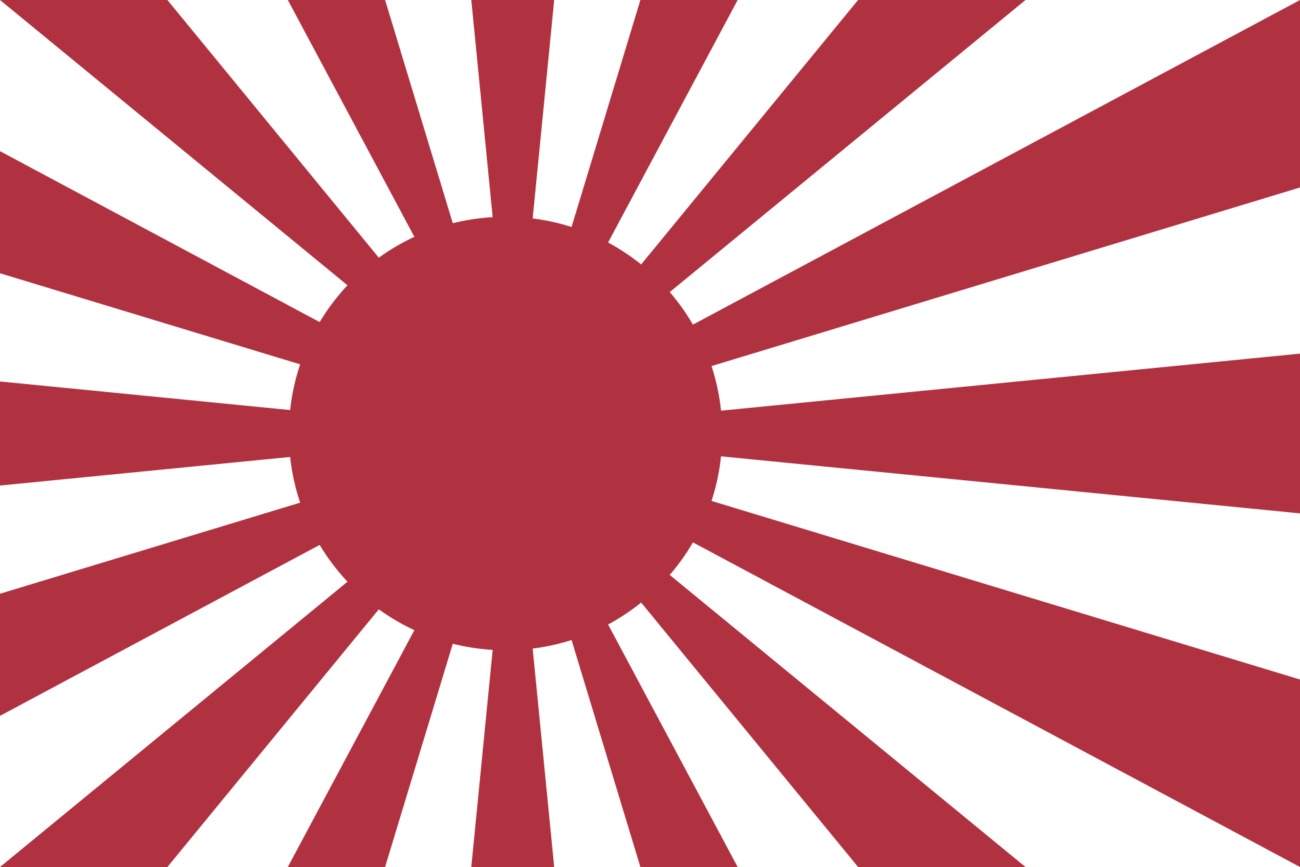
When Japan entered the Second World War with its surprise attack on Pearl Harbor on December 7, 1941, it already possessed one of the most powerful and experienced militaries in the world. Decades of modernization, imperial expansion, and warfare in China had transformed Japan into a formidable military power. Yet beneath its surface strength were vulnerabilities that would shape the outcome of its war against the Allied powers.
See Japan in the First World War: From Allied Power to Rising Empire
The Imperial Japanese Army
By late 1941, the Imperial Japanese Army (IJA) was a massive and battle-hardened force. It had been continuously engaged in combat since Japan’s invasion of China in 1937, and even before that had fought major conflicts such as the Russo-Japanese War (1904–05) and the invasion of Manchuria (1931).
- Personnel: Around 1.7 million active soldiers, with the potential to mobilize up to 6 million through reserves and conscripts.
- Divisions: Approximately 51 divisions and several independent brigades, most of which were stationed in China or on the Asian mainland.
- Equipment: The army had around 5,000 tanks (mostly light and medium types), 4,000 artillery pieces, and large numbers of trucks and support vehicles.
While the Japanese soldier was disciplined, well-trained, and fiercely loyal, the IJA faced several critical limitations. Its tanks and artillery were inferior to those of Western armies — designed for mobility in Asia rather than heavy European-style battles. Japanese tanks such as the Type 95 Ha-Go and Type 97 Chi-Ha were lightly armored and armed compared to American and Soviet designs.
In addition, Japan’s army doctrine emphasized spiritual strength and offensive action over modern mechanization or defensive warfare. This produced troops with high morale and courage but left them logistically weak against better-equipped foes.
The Imperial Japanese Navy
If the army was vast, the Imperial Japanese Navy (IJN) was Japan’s true pride and centerpiece of its military power. By 1941, it was widely regarded as the third strongest navy in the world, behind only Britain’s Royal Navy and the U.S. Navy — and in some aspects, even superior.
- Personnel: Around 400,000 officers and sailors.
- Major warships:
- 10 battleships, including the powerful Nagato and Mutsu, with the super-battleship Yamato nearing completion.
- 6 fleet aircraft carriers, including Akagi, Kaga, Soryu, Hiryu, Shokaku, and Zuikaku.
- 18 heavy cruisers, 18 light cruisers, and over 100 destroyers.
- 65 submarines, many of them long-range types.
In aircraft carrier operations, the IJN was the most advanced navy in the world at the time of Pearl Harbor. Its naval aviators were highly trained, and its carrier-based aircraft — notably the Mitsubishi A6M Zero fighter, the Nakajima B5N “Kate” torpedo bomber, and the Aichi D3A “Val” dive bomber — were superbly designed for long-range strikes.
Japan’s naval doctrine emphasized offensive, decisive battles, influenced by the victory over Russia in 1905. This strategy culminated in the attack on Pearl Harbor, which demonstrated Japan’s mastery of carrier warfare. However, the Navy suffered from weaknesses in industrial capacity and pilot replacement — losses of experienced aviators would prove disastrous later in the war.
The Imperial Japanese Air Service
Japan did not have a unified air force at the start of World War II; rather, it maintained two separate air arms:
- The Army Air Service (IJAAS), and
- The Navy Air Service (IJNAS).
Together, they fielded a powerful but fragmented air capability.
- Personnel: Roughly 40,000 airmen combined.
- Aircraft strength (1941): Around 5,500 aircraft, including about 2,000 front-line combat aircraft.
- Army Air Service: Operated fighters such as the Nakajima Ki-27 and Ki-43 “Oscar”, as well as light bombers.
- Navy Air Service: Operated the Zero, Val, and Kate, optimized for naval operations and long-range attacks.
At the outset of the war, Japanese pilots were among the most skilled in the world, thanks to rigorous training and combat experience in China. Japanese aircraft emphasized maneuverability and range over protection, which gave them an early edge but left them vulnerable to losses once the Allies developed tougher planes and tactics.
Technological Level and Comparison
In 1941, Japan’s military technology was uneven.
Strengths:
- World-leading naval aviation and carrier doctrine.
- Highly trained, disciplined soldiers and sailors.
- Superb torpedoes, particularly the Type 93 “Long Lance”, the best in the world at the time.
- Excellent ship design and craftsmanship.
Weaknesses:
- Limited radar and electronic warfare technology.
- Inadequate tank and artillery development.
- Poor logistical support and fuel shortages.
- Industrial base unable to match the mass production of the United States.
Compared to the Western powers, Japan’s forces were elite but fragile — formidable in offensive operations but lacking the industrial depth to sustain a long, attritional war.
Strengths and Weaknesses of the Japanese Military
Strengths:
- Experience: Years of warfare in China gave Japan’s military invaluable combat experience.
- Training: Japanese soldiers and pilots were exceptionally well-trained and disciplined.
- Naval Power: Japan’s carrier fleet and pilots were unmatched in early 1942.
- Strategic Boldness: Japan’s military leadership favored audacious and aggressive tactics.
Weaknesses:
- Industrial Limitations: Japan lacked the raw materials and production capacity to replace losses.
- Technological Gaps: Radar, armor, and heavy industry lagged behind the Allies.
- Pilot Attrition: Replacement training could not match early-war pilot quality.
- Rigid Doctrine: Overconfidence in spirit and offensive tactics led to strategic inflexibility.
Conclusion

At the time of its entry into the Second World War, Japan fielded a military of remarkable skill, courage, and innovation. It could strike with lightning speed and devastating effect, as seen in Pearl Harbor and the conquest of Southeast Asia. Yet Japan’s forces were built for quick victories, not prolonged global conflict.
Ultimately, while the Japanese military was among the most formidable in 1941, it lacked the industrial and logistical strength to sustain a modern war against the combined power of the United States, Britain, and the Soviet Union.
The rise and fall of Japan’s wartime military remains one of the most striking lessons of World War II — a story of early brilliance undone by overreach and the limits of national capacity.
This bonus episode of the Second World war Podcast was inspired by this post: