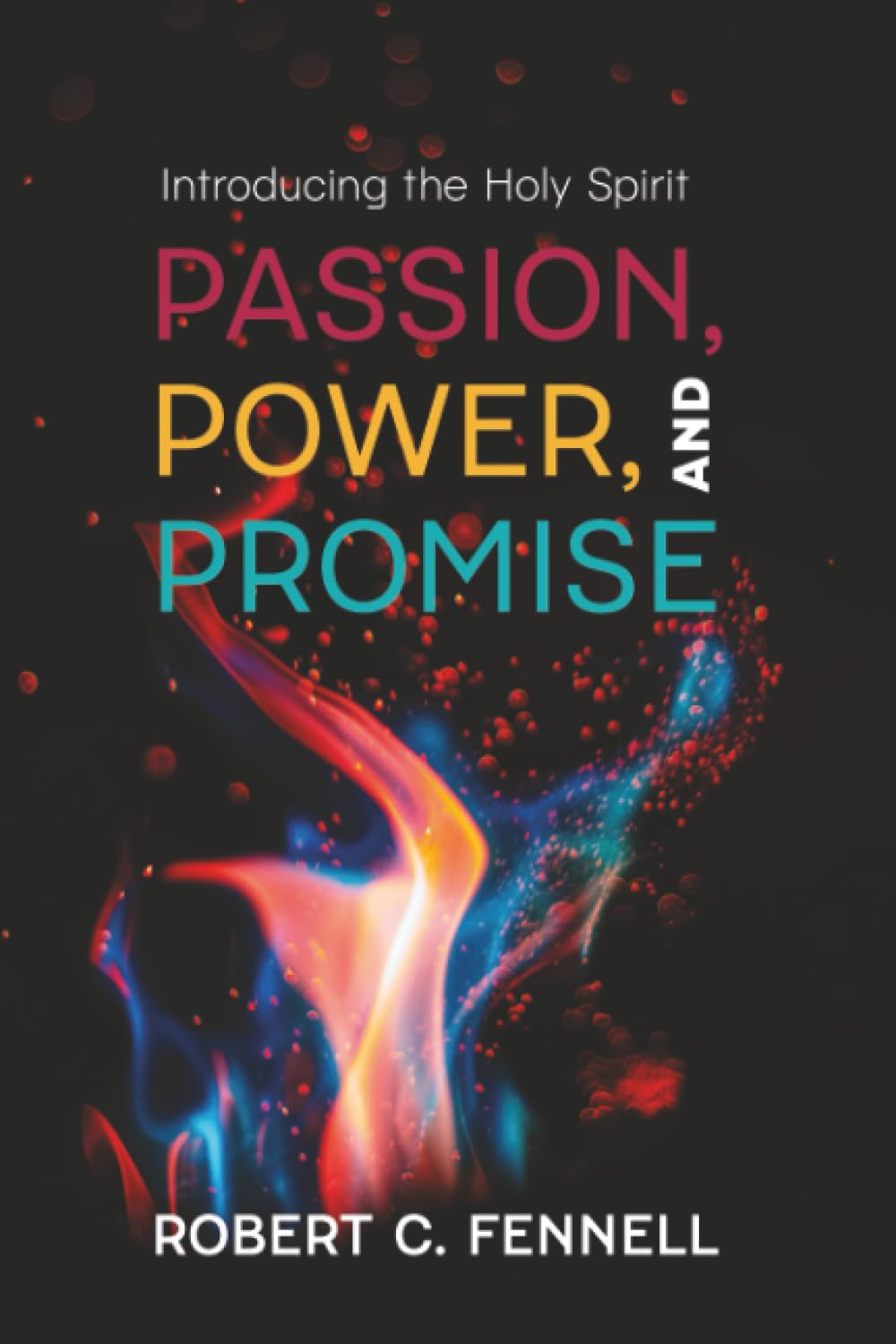
Passion, Power, and Promise: Introducing the Holy Spirit – Review
One of the goals that I have in terms of theology is to read outside of my tradition. I do not want to just have previous opinions strengthened. Plus, I don’t always agree with my own tradition. It is in this spirit that I read Passion, Power, and Promise by Robert C. Fennell.
Links in this post are Amazon affiliate links.
Fennell is a theologian with the United Church of Canada, one of the most liberal denominations in Canada. I am currently a Baptist and am a former Pentecostal. You would assume we disagree greatly, especially when it comes to the Holy Spirit.
You would be wrong.
I thoroughly enjoyed Fennell’s book on the Holy Spirit. Aside from what it taught me on the Holy Spirit, it challenged my preconceptions about United Church theology. I suspect that the UCC is as diverse as my own Baptist denomination.
Fennell comes at the Holy Spirit from three perspectives: the Bible, church history (especially Church Fathers and Reformers), and the United and Uniting tradition.
Passion, Power, and Promise is so incredibly biblical. Fennell immerses us in the biblical traditions, pulling on the various scriptural threads related to the Spirit. His study was more than academic, it was personally refreshing.
I was less familiar with what theologians throughout church history have said about the Holy Spirit. I was especially delighted in some of the things that John Calvin taught on the Spirit.
I was much less familiar with the United and Uniting tradition. I know the United Church of Canada well and have preached in a UCC church. I am also somewhat aware of the United Church of Christ in the United States.
However, there are a number of denominations around the world, many with “United” or “uniting” in their name, with somewhat similar but not identical theologies and practice. They would be on the liberal end of the theological spectrum. Fennell was able to bring them effectively in the conversation.
Most likely, a more conservative Christian reading Passion, Power, and Promise, would first notice the reference to the Holy Spirit as a “she” with some shock. This part did not bother me, as I do not think of the Spirit as male either. A female identity to the Spirit is as valid as a male one.
I did not fully agree with everything Fennell teaches on the Holy Spirit. There were disagreements. But I appreciated that he did not come across as dogmatic, demanding submission to his interpretations. It felt more like opening up space for conversation. I appreciated that.
I enjoyed Passion, Power, and Presence and can say in all honesty that I learned much about the Spirit. I also learned something about myself and my own preconceptions. This is definitely a book worth reading for Christians of any tradition.