

When people discuss the most important characters introduced in Action Comics #1, Superman naturally dominates the conversation.
That is understandable. Superman transformed popular culture and effectively launched the superhero genre.
But Superman was not the only important character introduced in that historic issue.

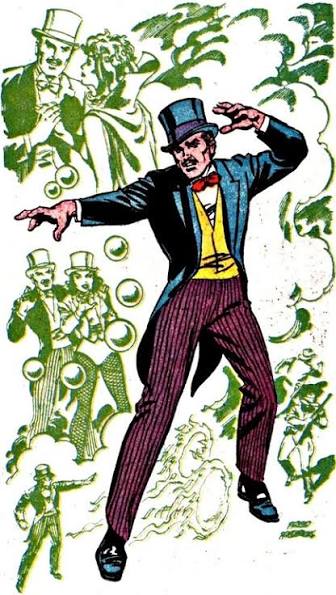
Action Comics #1, cover dated June 1938, also introduced Zatara the Magician, a mysterious crime-fighting stage magician created by writer and artist Fred Guardineer. DC itself identifies Zatara as one of the characters who debuted in the first issue of Action Comics.
Links are Amazon affiliate links.
Zatara would eventually become much more important to DC history than his modern obscurity suggests.
His own Golden Age adventures lasted more than a decade. More importantly, he became the father of Zatanna, one of DC’s most important magical characters.
Without Zatara, there would be no Zatanna—and the magical side of the DC Universe would look very different.
Zatara’s First Appearance
Zatara made his first appearance in Action Comics #1, released in 1938.
His story was titled “Zatara Master Magician,” and it was written and drawn by Fred Guardineer. The issue introduced Zatara as a stage magician who also used genuine supernatural abilities to fight crime.
This is an important piece of comic-book history.
Zatara did not debut in a minor or obscure publication.
He appeared in the very first issue of Action Comics.
The issue included Superman, Lois Lane, Zatara, and several other features. Superman would obviously become the dominant character, but Zatara was initially important enough to receive a substantial feature of his own.

In fact, Zatara appeared on the cover of Action Comics more than once during the early years of the series, including the cover of issue #14.
Today, Zatara is largely remembered because of his daughter.
In 1938, however, there was no reason to assume that Superman would become a cultural icon while Zatara would become a historical footnote.
Who Created Zatara?
Zatara was created by Fred Guardineer.
Guardineer was a prolific Golden Age comic-book artist and writer who created several magician characters for different publishers.
His work included characters such as Yarko the Great, Marvelo, Monarch of Magicians, and Tor the Magic Master.
This was not accidental.
Guardineer was working within a popular genre of the late 1930s: the comic-book magician.
Zatara was part of a larger movement in which publishers tried to adapt successful newspaper-strip and pulp concepts for the rapidly growing comic-book market.
The Mandrake Connection
The most obvious influence on Zatara was Mandrake the Magician.
Created by Lee Falk in 1934, Mandrake was one of the most successful newspaper comic-strip characters of the period.
Mandrake was a sophisticated stage magician who used his apparent magical powers to fight criminals and supernatural threats.
Zatara looked remarkably similar.
Both characters:
- Were stage magicians
- Wore formal magician’s clothing
- Used magic to fight crime
- Had large foreign companions
- Combined theatrical magic with genuine supernatural abilities
Zatara’s early companion was Tong, an East Indian bodyguard.
Mandrake had Lothar, a powerful African companion.
The similarities are sufficiently obvious that Zatara is best understood as part of the wave of Mandrake-inspired magician characters that appeared in comics during the 1930s and 1940s.
Guardineer was hardly the only creator to draw inspiration from Mandrake. The popularity of the character generated numerous similar magician heroes.
But Zatara developed one important characteristic of his own.
The Magic of Speaking Backwards
Zatara’s most distinctive characteristic was his use of backwards speech to perform magic.
Rather than simply waving a wand or casting a conventional spell, Zatara could manipulate reality by saying commands backwards.
For example, a magical command could be expressed in reverse speech.
This became one of the defining characteristics of the Zatara family.
Decades later, Zatanna would become famous for exactly the same technique.
The backwards speech was an especially clever device because it distinguished Zatara from the many other Mandrake-inspired magicians appearing in comic books.
It also provided a memorable visual and verbal gimmick for the stories.
Readers could see the magician speak strange phrases while the impossible happened around him.
Was Zatara Actually Magical?
This distinction became more important as DC continuity developed.
Originally, Zatara was presented as a magician with genuine supernatural abilities.
Later DC stories expanded the explanation for his powers.
The modern mythology of the character identifies Zatara as a genuine sorcerer, rather than simply a stage magician who happens to be extremely good at illusions.
This became especially important once DC developed a much more elaborate magical mythology.
Characters such as Doctor Fate, the Spectre, Zatanna, John Constantine, Swamp Thing, and others would eventually inhabit an interconnected supernatural corner of the DC Universe.
Zatara was one of the earliest members of that tradition.
Zatara’s Golden Age Career
Zatara’s original comic-book career was surprisingly long.
He appeared regularly in Action Comics beginning with issue #1 in 1938.
His stories featured him battling a remarkable assortment of villains and supernatural threats.
He fought:
- Criminal organizations
- Foreign adventurers
- Wizards
- Evil druids
- Monsters
- Mad scientists
- Warriors
- Supernatural beings
The stories could move freely between crime, adventure, fantasy, and outright magic.
This reflected the nature of Golden Age comics.
The rigid divisions between superhero, fantasy, science fiction, horror, and adventure that readers often assume today were much less developed.
A magician could fight a criminal gang in one story and an Egyptian wizard or supernatural monster in another.
World’s Finest Comics
Zatara eventually appeared in another important DC anthology: World’s Finest Comics.
The series began as an anthology featuring different DC characters, and Zatara became one of its recurring features.
He appeared alongside other popular DC characters, including Superman and Batman.
His World’s Finest run continued into the early 1950s.
The historical record shows Zatara’s final Action Comics story appearing in Action Comics #141 in February 1950. After that, his stories continued in World’s Finest Comics, with his final Golden Age story appearing in World’s Finest Comics #51 in 1951.
This gives Zatara a significant original publishing run:
1938–1951.
For approximately thirteen years, Zatara was a recurring DC character.
That makes his later obscurity somewhat surprising.
Why Did Zatara Disappear?
The early 1950s were a difficult period for many Golden Age superheroes.
The superhero market contracted dramatically after World War II.
Characters who had been extremely popular in the 1940s disappeared from publication.
Zatara was one of them.
After World’s Finest Comics #51 in 1951, Zatara essentially disappeared from contemporary comic-book storytelling.
For more than a decade, he was not a regular DC character.
And then something happened that completely changed his historical importance.
Enter Zatanna
In 1964, DC introduced Zatanna Zatara, Zatara’s daughter.
Zatanna first appeared in Hawkman #4. DC identifies this as her official first appearance.
Her initial story was not simply the introduction of a new female magician.
It was a mystery involving her missing father.
Zatanna began searching for Zatara.
The story eventually developed into a crossover involving several DC heroes.
This was enormously significant.
Zatara had gone from being a forgotten Golden Age magician to being the key figure in the origin story of a new Silver Age character.
“Zatanna’s Search”
The storyline known as “Zatanna’s Search” was one of the more interesting examples of early DC crossover storytelling.
Zatanna appeared in a series of stories involving characters such as:
- Hawkman
- Batman
- The Atom
- Green Lantern
- The Flash
The heroes gradually became involved in her attempt to find her father.
Eventually, the Justice League became involved.
This was an early example of DC using multiple titles to tell an interconnected story involving a character who was not yet a major established superhero.
It also provided a clever way of bringing an obscure Golden Age character back into the developing DC mythology.
Zatara was no longer simply a character from the 1930s.
He was now part of the backstory of one of DC’s emerging magical heroes.
Zatara and the Justice League
The importance of Zatara therefore extended beyond his own stories.
The search for him helped connect Zatanna with the broader DC superhero community.
Zatanna eventually became a major member of the Justice League.
That meant Zatara indirectly became part of Justice League history.
The character who had once been a magician in a six-page Golden Age adventure was now connected to some of DC’s most important superheroes.
This is an excellent example of how DC’s shared universe could transform old characters.
A character did not necessarily need to remain continuously popular to remain useful.
A character’s history could become a resource for future writers.
Zatara as Zatanna’s Father
Ultimately, Zatara’s greatest contribution to DC history is his relationship with his daughter.
Zatanna inherited his magical abilities and his backwards-speaking method of casting spells.
But she became a much more prominent character.
Zatanna developed into one of DC’s principal magical superheroes.
She has worked with the Justice League and interacted with virtually every major part of the DC Universe.
DC describes her as a powerful magician capable of manipulating reality and identifies her father as a major part of her backstory.
This gave Zatara a new importance.
He became part of a magical lineage.
The Zatara Family
DC subsequently expanded the Zatara family.
The mythology came to include:
Giovanni “John” Zatara
↓
Zatanna Zatara
and later other members of the extended family, including Zachary Zatara.
The mythology also developed the idea that the Zatara family had connections to the Homo Magi, a fictional race of humans with an innate connection to magic.
This transformed Zatara’s original Golden Age abilities into part of a much larger mythology.
What had originally been a comic-book gimmick became a hereditary magical tradition.
Zatara’s Later Appearances
Although Zatara never returned to the kind of regular feature he had enjoyed during the Golden Age, DC continued to use him.
He appeared in flashbacks and stories dealing with Zatanna’s history.
He also became part of stories concerning the magical history of the DC Universe.
His modern appearances include material connected to:
- Justice League of America
- Swamp Thing
- New Adventures of Superboy
- Zatanna
- Detective Comics
- Batman: Streets of Gotham
- Other historical and flashback stories
His chronology includes appearances extending from the Golden Age into modern DC continuity.
One particularly important development was his death.
Zatara’s Death
Zatara’s death was depicted in Swamp Thing #50 in 1986.
This was significant because the character was no longer merely being revived for nostalgia.
His history had become part of the emotional and supernatural mythology surrounding Zatanna.
Zatara’s fate became part of the reason for Zatanna’s relationship with magic and her understanding of its dangers.
His death therefore gave the character additional dramatic significance.
Zatara and the Development of DC’s Magical Universe
Zatara’s importance is easy to underestimate because he was never as famous as Superman, Batman, Wonder Woman, or even many of the major Golden Age heroes.
But his influence is more apparent when we look at DC’s magical characters as a whole.
The DC Universe eventually developed a substantial supernatural mythology.
Among its major figures are:
- Doctor Fate
- Zatanna
- The Spectre
- Deadman
- Swamp Thing
- John Constantine
- Madame Xanadu
- Etrigan
- The Phantom Stranger
Zatara belongs to the earliest generation of characters that helped establish the idea that DC’s superheroes could operate alongside genuine magic.
He helped demonstrate that a comic-book universe could contain both Superman’s science-fiction mythology and a world of sorcery.
That flexibility became one of DC’s greatest strengths.
Zatara and Doctor Fate
There is an important distinction here.
Zatara did not create Doctor Fate, and he was not the foundational figure of DC’s magical universe in the same way that Superman was foundational to its superhero mythology.
Doctor Fate first appeared in 1940.
However, characters such as Doctor Fate and Zatara helped establish magic as a legitimate part of the DC setting during the Golden Age.
Later writers could therefore treat magic as something that had existed in the DC Universe for decades.
Zatara became one of the links connecting the early comic-book era to the later supernatural mythology.
The Importance of Zatanna
The best way to measure Zatara’s historical importance is probably not by asking how many readers remember his Golden Age adventures.
Instead, ask:
What happened to the character’s legacy?
The answer is substantial.
His daughter became a major DC superhero.
Zatanna became a Justice League member.
She became one of the most recognizable magic-users in DC Comics.
She developed important relationships with characters such as Batman, John Constantine, and other supernatural heroes.
She eventually received her own ongoing series, including the 2010 series written by Paul Dini.
In other words, Zatara’s legacy became much larger than Zatara himself.
Zatara and the History of Comic Books
Zatara is also historically significant because of when he appeared.
He debuted in 1938.
That places him at the absolute beginning of the superhero era.
He appeared in the same comic book that introduced Superman.
He was created at a time when comic books were still experimenting with what kinds of characters they could contain.
He was simultaneously:
- A magician
- A crime fighter
- An adventurer
- A fantasy hero
- A superhero
The modern DC Universe contains characters occupying all of these categories.
Zatara represents one of the early experiments that helped establish that range.
The Mandrake Problem
There is also an interesting historical irony to Zatara.
His most obvious inspiration was a character from outside the DC Universe.
Mandrake the Magician had appeared four years earlier.
Zatara’s costume, profession, companion, and general concept clearly reflect the popularity of Mandrake.
Yet Zatara developed one characteristic that became much more important than his original similarities to Mandrake:
backwards magic.
That gimmick survived.
When Zatanna appeared in 1964, she inherited it.
Today, most readers who know Zatanna associate her with backwards spells.
That idea can therefore be traced directly back to Fred Guardineer’s original Zatara.
Why Is Zatara Forgotten?
It is worth asking why such an old character is not more famous.
The answer is largely structural.
Superman continued to receive stories almost continuously.
Batman did as well.
Wonder Woman remained in publication.
Many Golden Age heroes were revived or reinvented.
Zatara, however, disappeared in 1951.
He did not receive a new solo series.
He did not become a member of a major superhero team.
He did not receive a major television or film adaptation.
Instead, his legacy survived primarily through his daughter.
This means that modern readers tend to encounter Zatara indirectly.
They meet Zatanna first.
Then they discover that she is the daughter of a magician who debuted alongside Superman in 1938.
An Unexpected Legacy
This makes Zatara an unusual character in DC history.
He was not one of the most successful Golden Age heroes.
He did not become a household name.
He did not headline one of DC’s most famous franchises.
But he survived through legacy.
His name, powers, magical tradition, and distinctive backwards speech were passed to his daughter.
Zatanna became far more famous than her father.
Through her, Zatara became connected to the Justice League, DC’s supernatural characters, and generations of subsequent comic-book stories.
His influence is therefore larger than his popularity.
Zatara’s Place in DC History
Zatara should be remembered as more than “Zatanna’s father.”
He was one of the original characters of the DC Universe.
He appeared in the first issue of Action Comics.
He was created by Fred Guardineer in 1938 and was part of the wave of magician characters inspired by the enormous popularity of Mandrake.
He starred in Action Comics for more than a decade and later appeared in World’s Finest Comics, with his original feature ending in 1951.
Then he disappeared.
But he did not disappear from DC history.
The introduction of Zatanna in 1964 transformed his role. The forgotten Golden Age magician became the father of one of DC’s most important magical heroes.
His influence continued through Zatanna’s stories and through the broader development of DC’s supernatural mythology.
Conclusion

Zatara is one of those characters whose importance is easy to miss when looking only at popularity.
He debuted in one of the most important comic books ever published: Action Comics #1.
He was created by Fred Guardineer during the Golden Age’s fascination with magician heroes.
He was heavily influenced by the enormously popular Mandrake the Magician, but developed his own distinctive identity through his use of backwards speech.
For approximately thirteen years, Zatara was a regular DC feature, appearing primarily in Action Comics and World’s Finest Comics.
Then he disappeared.
But DC eventually discovered that an old character did not need to be continuously published to remain valuable.
In 1964, Zatara became the father of Zatanna.
That decision gave him a second life.
Zatanna became a major superhero, Justice League member, and one of the central magical figures in the DC Universe. Her powers and backwards incantations preserved her father’s most distinctive characteristics.
In that sense, Zatara’s greatest achievement was not what he accomplished during his original Golden Age run.
It was what he left behind.
Zatara helped establish magic as part of the DC Universe, and through Zatanna, his legacy has remained part of that universe for more than eighty years.
He may not be as famous as Superman, Batman, or Wonder Woman.
But when discussing the history of DC Comics, it is worth remembering that one of its earliest characters was a magician in a top hat who could make reality obey him simply by speaking backwards—and he appeared in the very first issue of Action Comics alongside Superman.