
When people think of the American Revolution, they often picture the Continental Army under George Washington fighting British regulars in set-piece battles such as Saratoga and Yorktown. Yet much of the war, particularly along the New York frontier and in the Great Lakes region, was fought as a brutal guerrilla conflict between neighbors, settlers, Loyalists, and Indigenous allies. Few units became as famous—or infamous—as Butler’s Rangers, a Loyalist corps that fought on behalf of the British Crown.
For the Patriots, Butler’s Rangers were feared raiders responsible for some of the most destructive attacks of the war. For Loyalists, they were courageous defenders of the Crown who sacrificed their homes and livelihoods for their principles. Their story did not end with the American Revolution, however. Their legacy would continue in Canada long after the guns fell silent.
The Origins of Butler’s Rangers
Butler’s Rangers was officially formed in September 1777 as a provincial regiment serving the British Army. Provincial regiments were units raised locally in the colonies rather than being part of the regular British Army.
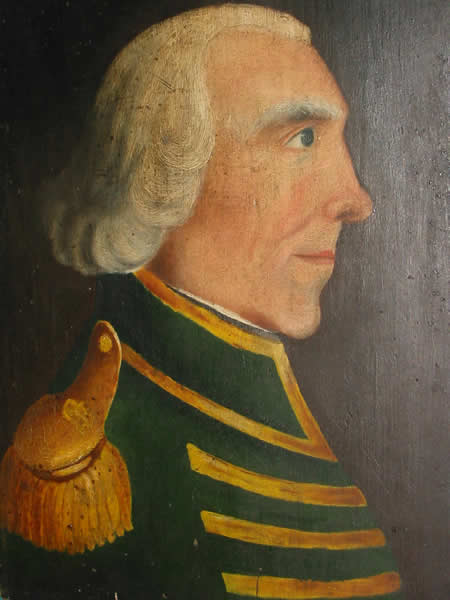
The regiment was commanded by John Butler, from whom the unit took its name.
The corps was designed to fight a different kind of war than that waged by the British regulars. Rather than standing in formation on open battlefields, Butler’s Rangers specialized in:
- Frontier warfare
- Reconnaissance
- Raids
- Intelligence gathering
- Guerrilla operations
They operated primarily in western New York, Pennsylvania, and the Great Lakes region.
Who Was John Butler?
John Butler was born in 1728 in Connecticut but later settled in the Mohawk Valley of New York. Before the Revolution, he was:
- A farmer
- A landowner
- A trader
- An officer in the colonial militia
- A diplomat with the Six Nations of the Iroquois Confederacy
His long-standing relationships with the Indigenous peoples of New York would prove invaluable during the war.
When the Revolution broke out, Butler remained loyal to the British Crown. This decision cost him his property and made him a target of Patriot authorities.
After escaping to Canada, he helped organize Loyalist and Indigenous forces for operations against the rebels.
John Butler became one of the most important Loyalist leaders on the northern frontier and eventually attained the rank of lieutenant colonel.
Who Served in Butler’s Rangers?
The regiment consisted largely of:
- Loyalists from New York
- Men from Pennsylvania
- Former militiamen
- Frontiersmen
- Refugees who had fled Patriot-controlled areas
The regiment also worked closely with Indigenous allies, especially members of the:
- Mohawk people
- Seneca people
- Other nations of the Iroquois Confederacy.
Among the better-known members of the Rangers were:
Walter Butler
Walter Butler, the son of John Butler, became one of the regiment’s officers and led several raids during the war.
William Caldwell
William Caldwell served with distinction and later became an important figure in Upper Canada.
Joseph Brant’s Associates
Although not formally a member of Butler’s Rangers, Joseph Brant frequently operated alongside the Rangers and became one of Britain’s most important Indigenous allies.
Isaac Van Valkenburg
Isaac Van Valkenburg served as a private in the regiment. After the war, he settled in Upper Canada and became the ancestor of numerous Ontario families, many of whom later adopted the surnames Vollick and Follick.
Thousands of Canadians today trace their ancestry back to former Rangers.
Major Campaigns and Battles
The Siege of Fort Stanwix (1777)
The Rangers participated in the British campaign to capture Fort Stanwix.
Although the siege ultimately failed, it established the Rangers as an effective frontier force.
The Battle of Oriskany (1777)
Battle of Oriskany was one of the bloodiest engagements of the Revolution.
The Rangers fought alongside Indigenous allies against Patriot militia attempting to relieve Fort Stanwix.
The battle became a bitter civil war within the Mohawk Valley, pitting neighbor against neighbor and even family against family.
The Wyoming Valley Raid (1778)
Perhaps the most controversial operation involving Butler’s Rangers was the attack on the Wyoming Valley in Pennsylvania.
Patriot accounts described the event as the “Wyoming Massacre,” alleging widespread atrocities.
Modern historians generally conclude that while killings did occur, many of the more sensational stories were exaggerated by wartime propaganda.
The Cherry Valley Raid (1778)
Cherry Valley massacre became another infamous event.
A number of civilians were killed during the attack, and Patriot outrage further cemented the Rangers’ reputation as ruthless frontier raiders.
Frontier Raids (1779–1781)
Throughout the war, Butler’s Rangers conducted numerous raids against:
- Military outposts
- Supply depots
- Settlements
- Communication lines
Their operations tied down large numbers of American troops and created continual insecurity along the frontier.
The Sullivan Expedition
The activities of Butler’s Rangers and their Indigenous allies prompted the Americans to launch the Sullivan Expedition.
Under the command of John Sullivan, American forces devastated many Iroquois communities and destroyed crops and villages throughout western New York.
The campaign represented one of the most destructive episodes of the Revolutionary War.
How Long Did Butler’s Rangers Exist?
Butler’s Rangers served from:
1777–1784
Although the American Revolution effectively ended with the Treaty of Paris in 1783, the regiment remained in service for an additional year while arrangements were made for the resettlement of Loyalists.
The corps was formally disbanded in 1784.
What Happened to the Rangers?
Most members of Butler’s Rangers could not safely return to the United States because of their loyalty to Britain.
As a result, many settled in:
- The Niagara Peninsula
- The Grand River region
- Other parts of what became Upper Canada
The British government granted land to many former Rangers in recognition of their service.
Former members became:
- Farmers
- Merchants
- Local officials
- Militia officers
- Community leaders
Their settlement helped lay the foundations for modern Ontario.
The Legacy of Butler’s Rangers
The memory of Butler’s Rangers remained strong in Upper Canada.
During the War of 1812, many sons and grandsons of former Rangers fought against the United States once again.
Several modern Canadian military units trace part of their heritage to Butler’s Rangers.
Most notably:
- The Lincoln and Welland Regiment perpetuates the history and traditions of Butler’s Rangers.
- Elements of the Rangers’ legacy also survive through regional militia traditions that developed in Upper Canada after the Revolution.
Today, Butler’s Rangers are recognized as one of the founding military traditions of Ontario.
A Controversial Legacy
The reputation of Butler’s Rangers remains contested.
To many Americans, they were dangerous Loyalist raiders associated with frontier massacres.
To many Canadians, they were pioneers, Loyalists, and founders of communities in Upper Canada.
The truth is more complex.
Butler’s Rangers fought in one of the most brutal theaters of the American Revolution—a civil war marked by guerrilla warfare, reprisals, and attacks on civilians by all sides.
Their story reminds us that the Revolution was not simply a struggle between Americans and the British. It was also a conflict that divided families, communities, and Indigenous nations, leaving legacies that continue to shape both the United States and Canada.
Conclusion
From their formation in 1777 under Lieutenant Colonel John Butler to their disbandment in 1784, Butler’s Rangers became one of the most effective and feared Loyalist units of the American Revolution. Fighting at Oriskany, Wyoming Valley, Cherry Valley, and countless frontier raids, they played a significant role in Britain’s war effort in North America. Though the regiment disappeared after the war, its members helped settle Upper Canada and left a lasting legacy that survives in Canadian communities and military traditions to this day.